






Ballet Mécanique
PRESENTATION
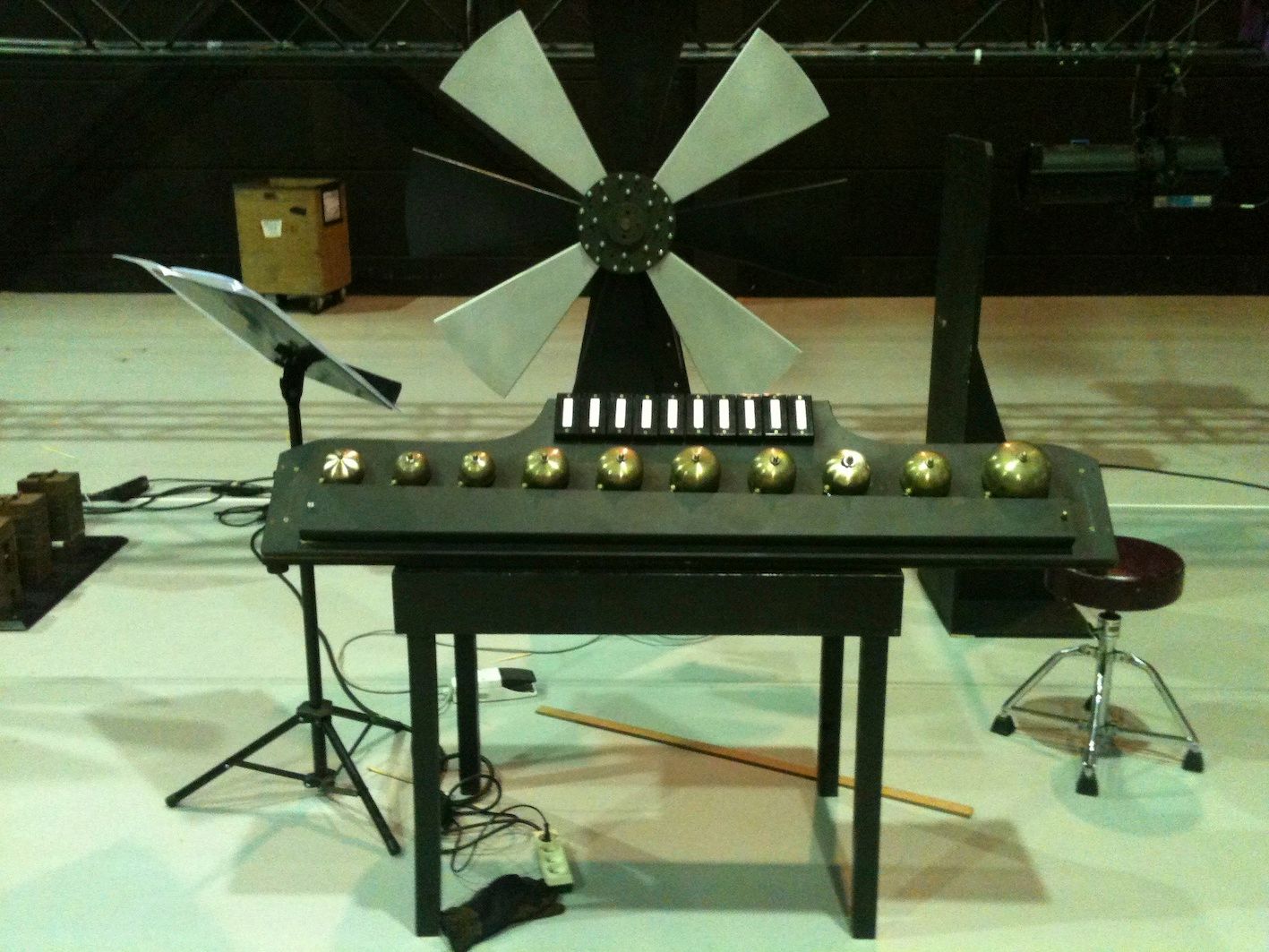
George Antheil (1900-1959) : Ballet Mécanique (1924) for two pianos, percussions, propellers, rings and siren.
ICTUS PREMIERE: Lille Opera (France), 07.12.2012: Ballets Mécaniques (dérive futuriste)
a marathon-programme in different spaces spread allover the opera-house, including works of Edgar Varèse, George Antheil, Luciano Chessa, Kurt Schwitters, a.o., presented by Ictus, Cris de Paris and soloists Michaël Schmid and Fabian Fiorini, as well as performer Luciano Chessa and the Russolo machines. LINK
Other performances (a.o.)
October 2013 with scientist Jean-Paul Van Bendegem
May 2015 with new MIDI machines developed by Stichting Logos
March 2022 in Belgian Trains Central Workshop, Mechelen
* MIDI arrangements inspired by Paul Lehrman's
* Conducted by Georges-Elie Octors

Video #1:
"Ballet mécanique, 1924, Film by Dudley Murphy et Fernand Léger.
Music by George Antheil, for 2 pianos, 3 xylophones, 4 bass drums, airplane propellers, electric bells, and sirens.
Performed by Ictus at Opéra de Lille, December 2012, Georges-Elie Octors (cond.).
MIDI files and recommendations by Paul Lehrman, reviewed by Ictus.
This version is a hypothesis. There is no “official” synchronization of the film and music that has come down to us.
BALLET MÉCANIQUE
[text : 2012]
Ballet Mécanique (1924), the original version of which we propose to re-enact (slightly revamped), was an attempt by the American composer George Antheil, the painter Fernand Léger, and the director Dudley Murphy to offer a multimedia experience before there was even a name for it.
In common with Edgar Varèse – although he was the author of a work that was much more uneven - the American George Antheil incarnated in France the very model of a "futurist" composer, thanks to his outrageous and impassioned attitude. An ephemeral friend of Stravinsky, admired by James Joyce and Jean Cocteau and adored by Ezra Pound, who hyped the composer to high heaven, the brilliant "Bad Boy of Music" (as he dubbed himself in his autobiography), dreamed up a wildly engine-like work, the most mercilessly mechanical score imaginable, outmatching the Noces by Igor Stravinsky, by which he had just been thunderstruck. Where Stravinsky had deployed four pianos, Antheil opted for 16. Sixteen mechanical pianos flanked by helicopter blades, sirens, eight bells, three xylophones and numerous percussion instruments. The form was cast in one piece "like a tree made of steel, while the style was at times cool and glistening and at other times burning like an electric oven". More: "With Ballet Mécanique, I am offering you for the first time music that is as hard and beautiful as a diamond ", he dared to write. But the best laid plans of mice and men... : the 16 unsynchronisable mechanical pianos were reduced to a single one, while four authentic pianists were recruited. On the opening night, the wigs of the audience members sitting in the front row were blown off by the helicopter blades, the sirens could not be stopped, it was omnishambolic. In the year 1952, the more restrained and neo-classical composer returned to the music and rearranged it to produce a lighter rhythm. What we are now offering is more or less the original idealistic and madly startling version of 1924, in keeping with the first manuscript. The sole difference is that the 16 mechanical pianos have given way to a horde of 16 synthesisers. Stravinsky's dissonance stretched to the limit, the unflagging repetition, the chemistry at work in the machine-like heavy-handedness and the lightening speed – all of these ingredients succeed in making the Ballet Mécanique a wholly unique work in the history of the 20th century.
As for Fernand Léger's specially commissioned film it will never be produced at the same time as Antheil musical work. From what ever angle it is tackled, the final cut fails to match the score. We will be offering a seven-minute extract, very slightly altered to obtain two or three points of intersection with the musical form. Léger was an enthusiastic participant in the adventure, during a period plagued by doubt, where the power of cinema rendered him somewhat inhibited and despairing when it came to painting: he had seen the Roue by Abel Gance and the films by Chaplin. It was then that he was struck by the idea of a "simultaneous" lyrical form (a typically futurist expression) of the moving image, dominated by extracts and close-ups.
He wrote: "No script. A series of rhythmical images, nothing else [...]. We persist until the observer's eye and spirit cannot stand any more, exhausting the entertainment value until it becomes positively unbearable."
ALBUM
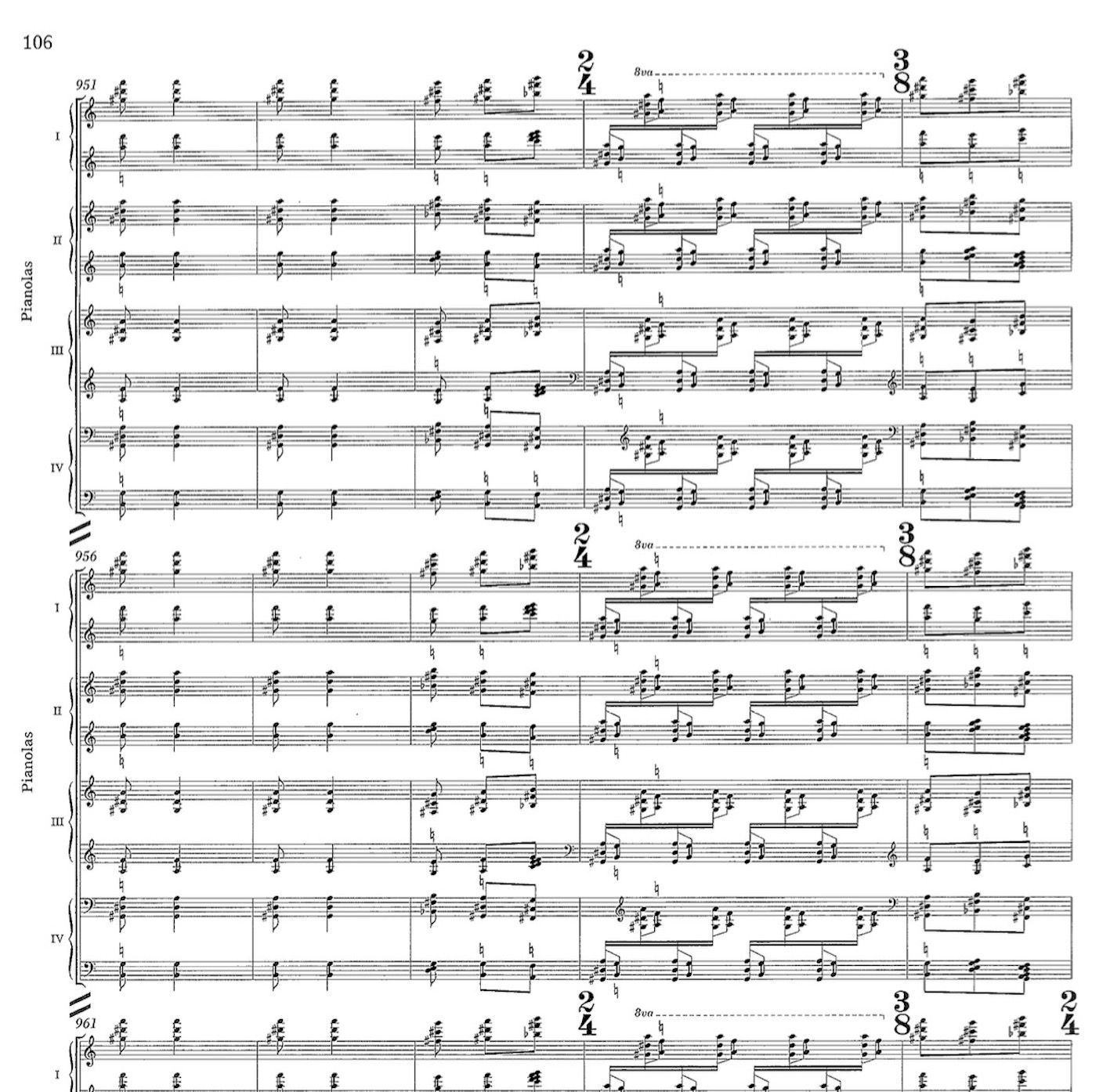
Gallery below: photos in concert, rehearsing, and an excerpt from the score.


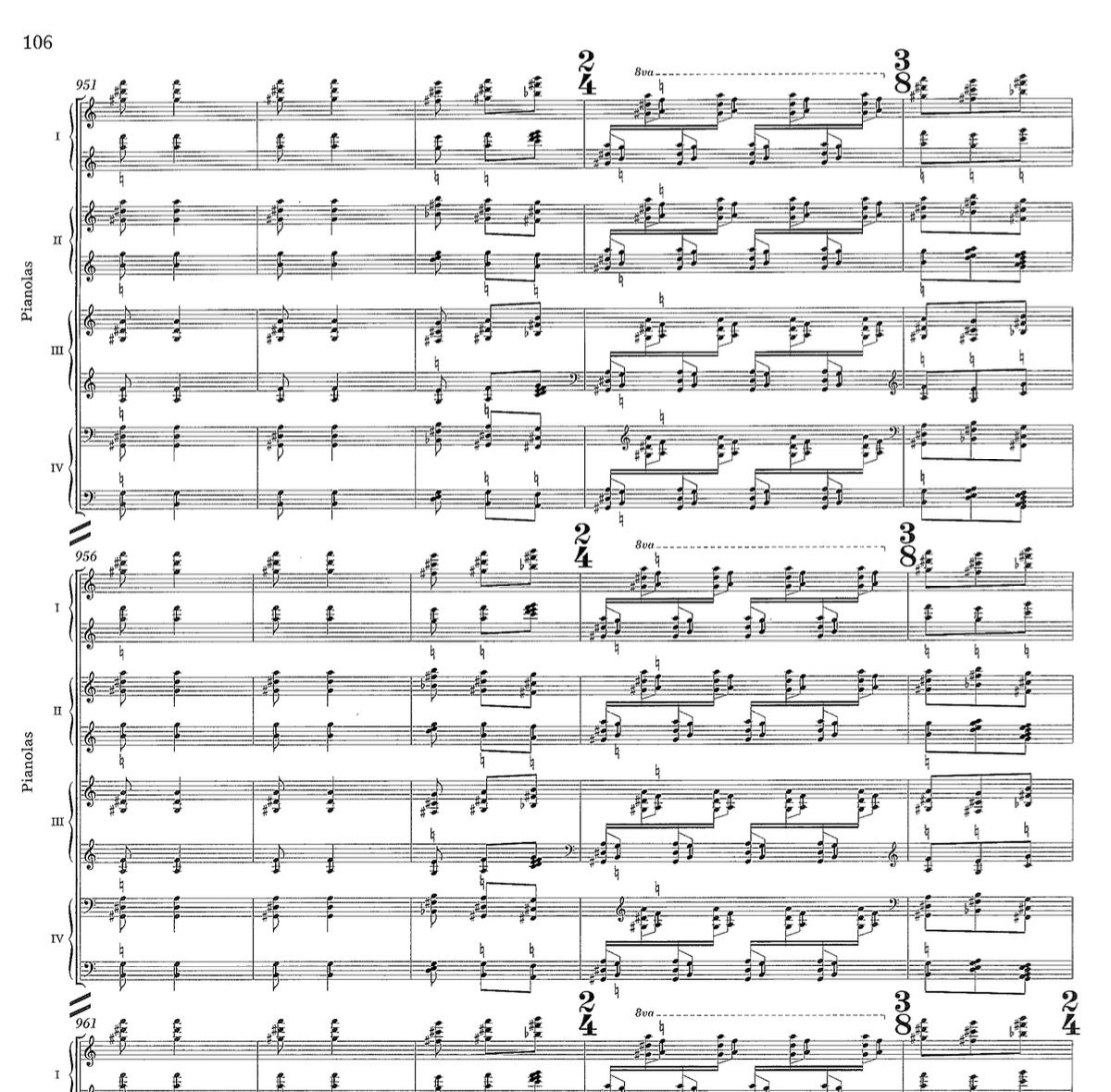


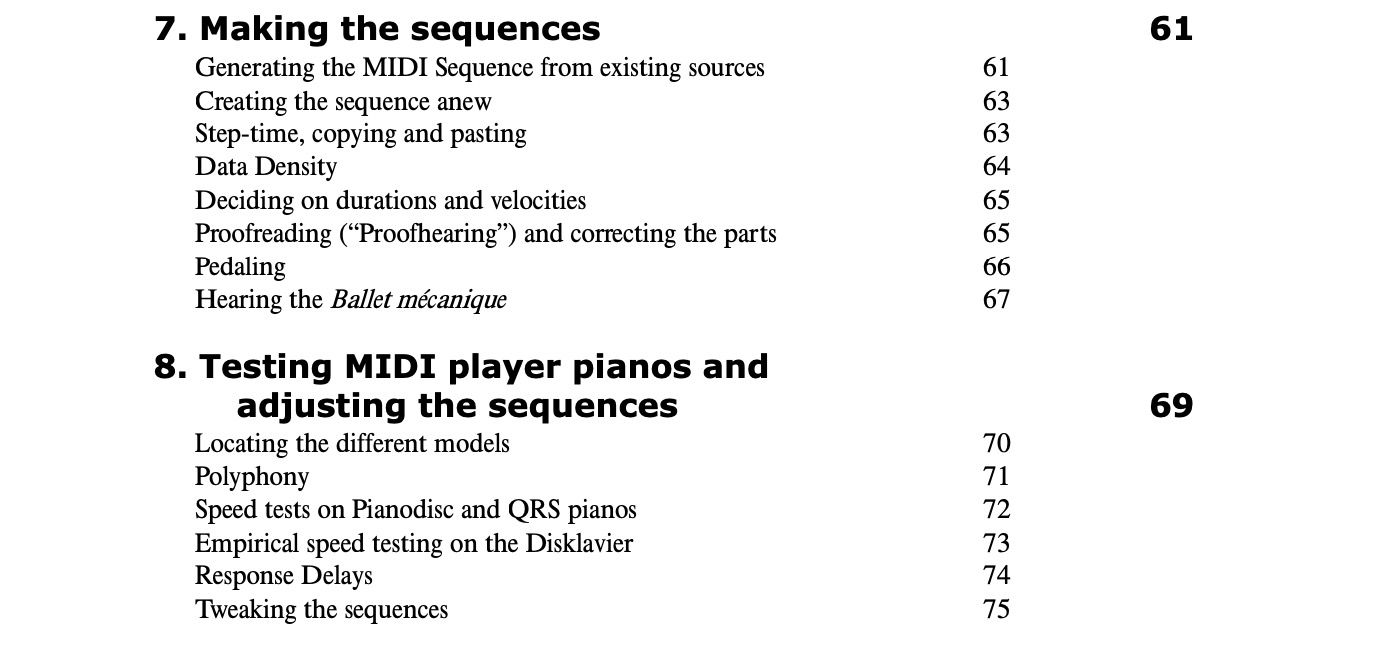
BELOW: Paul D. Lehrman's crucial contribution to understanding Ballet Mécanique and its contemporary realization with MIDI files.
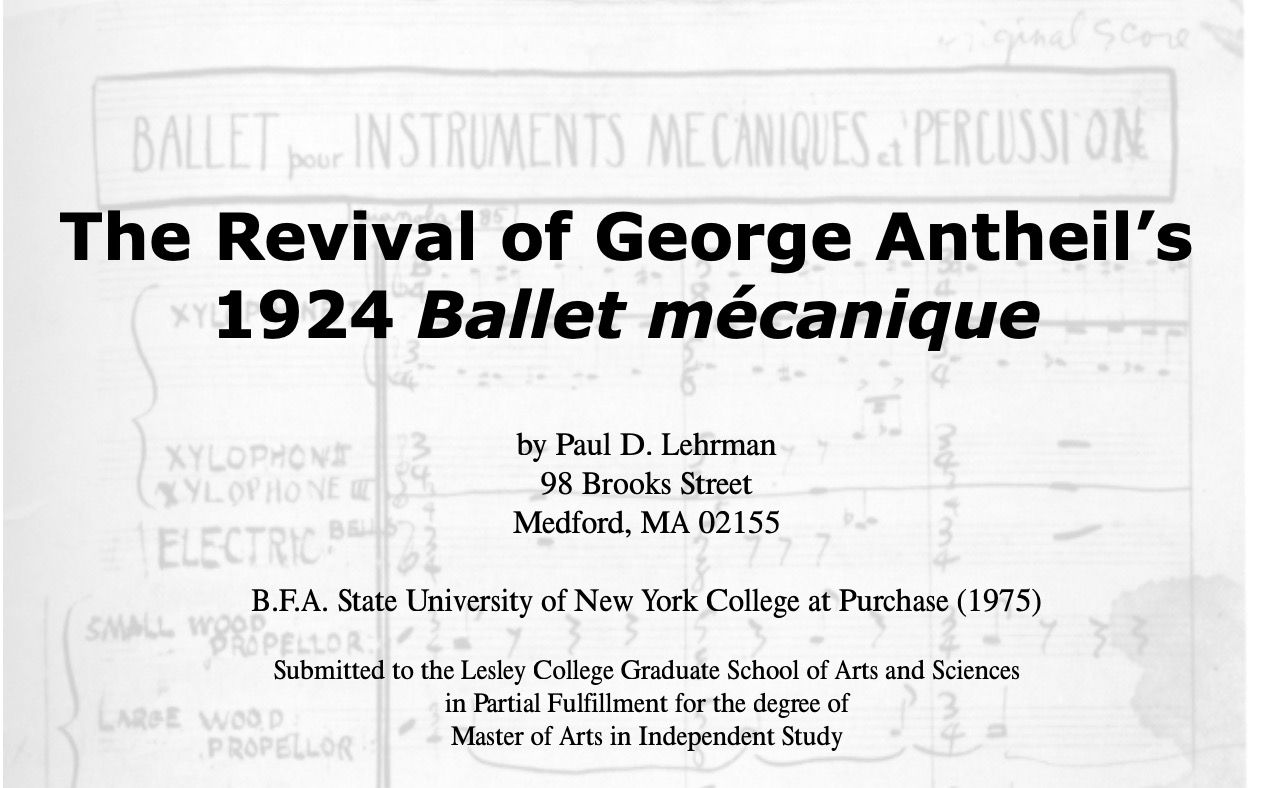
Video #2
Our premiere in Lille Opera, December 7th, 2012, Georges-Elie Octors (cond.)
Contemporary music can be dangerous!
Excerpt from one of our technical data sheets. It is true that Georges-Elie, while rehearsing in our studio, wanted to test the sound made by a knitting needle when placed in the propeller blades, and that the needle pierced his hand. He miraculously escaped paralysis of that hand.
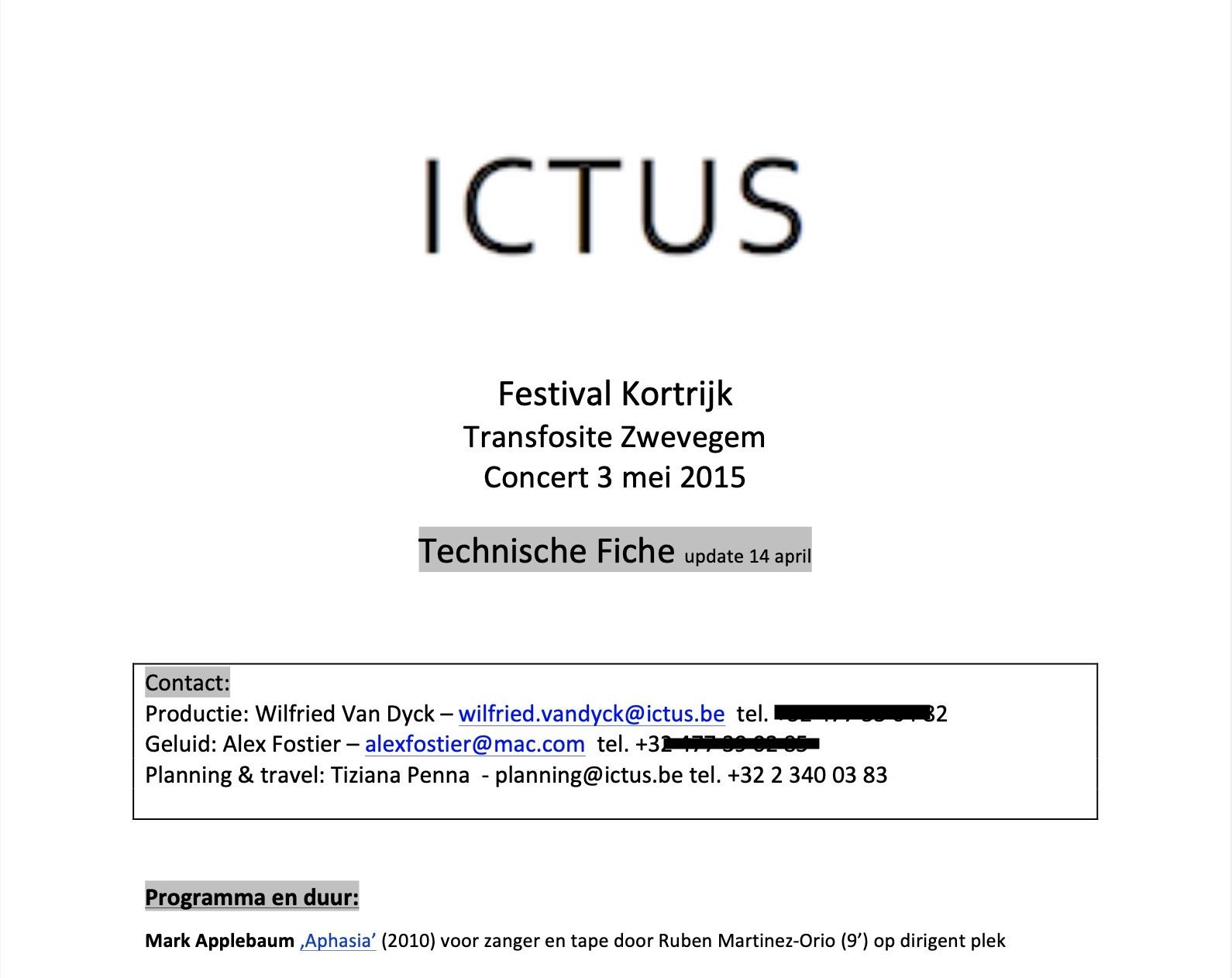
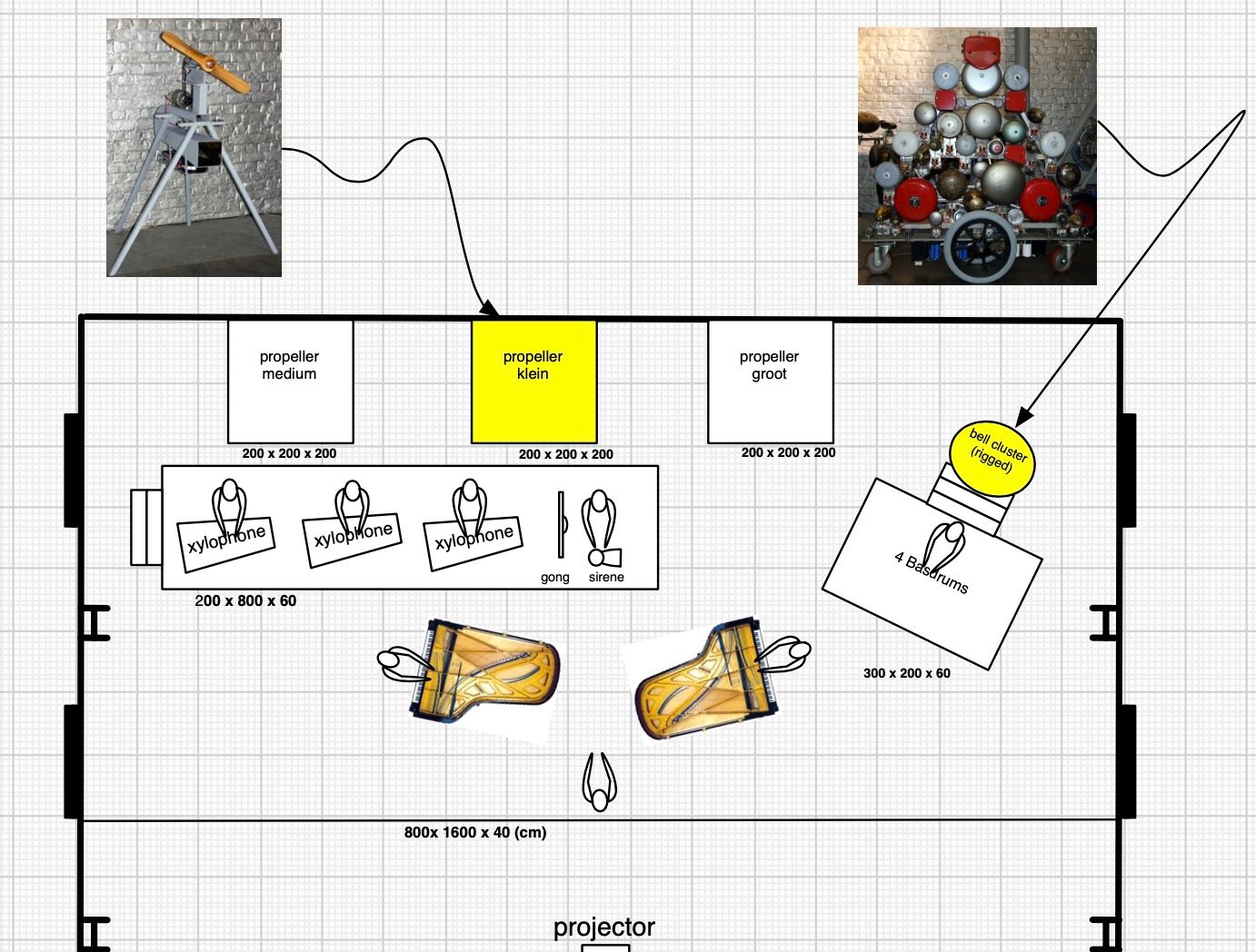
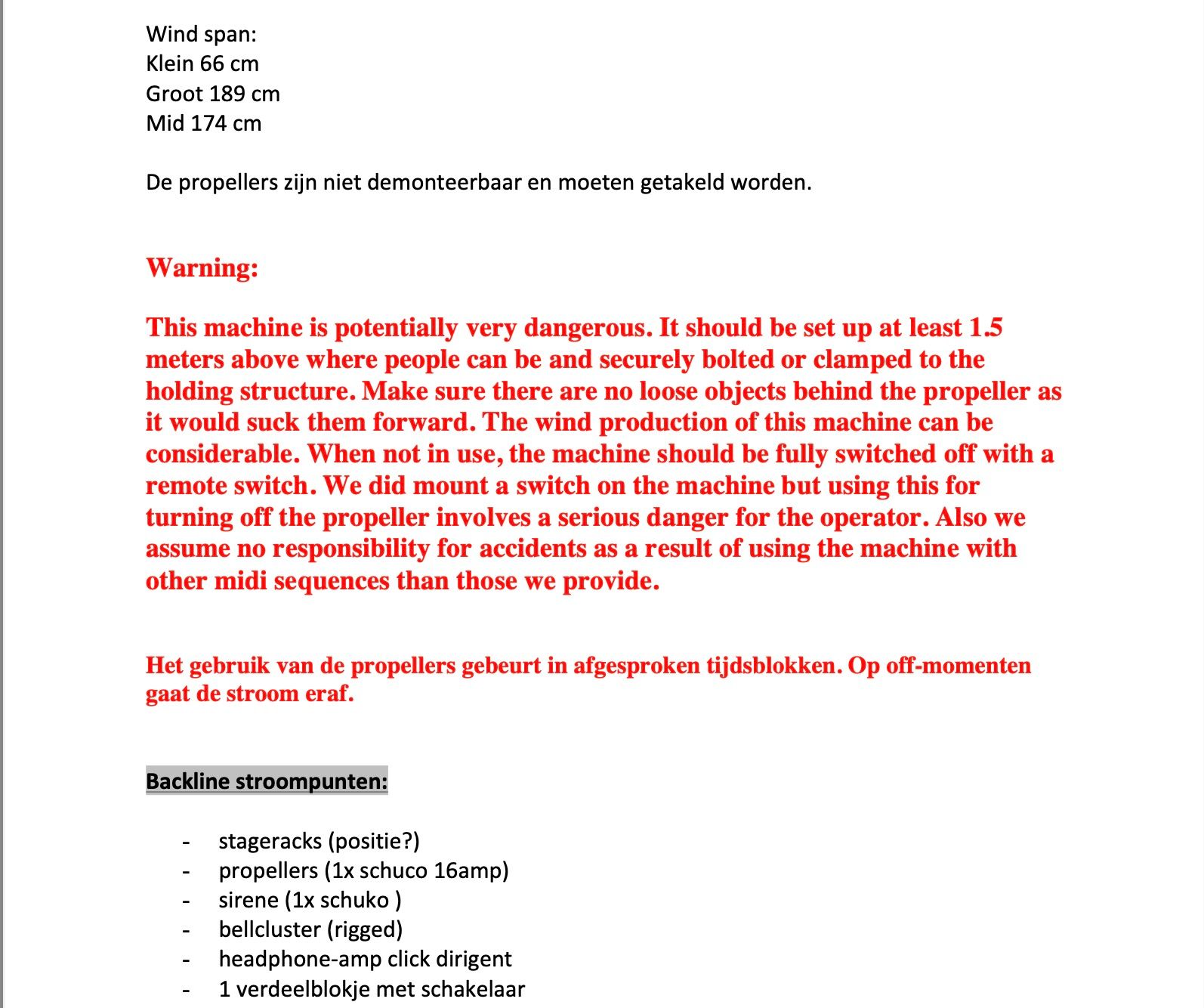
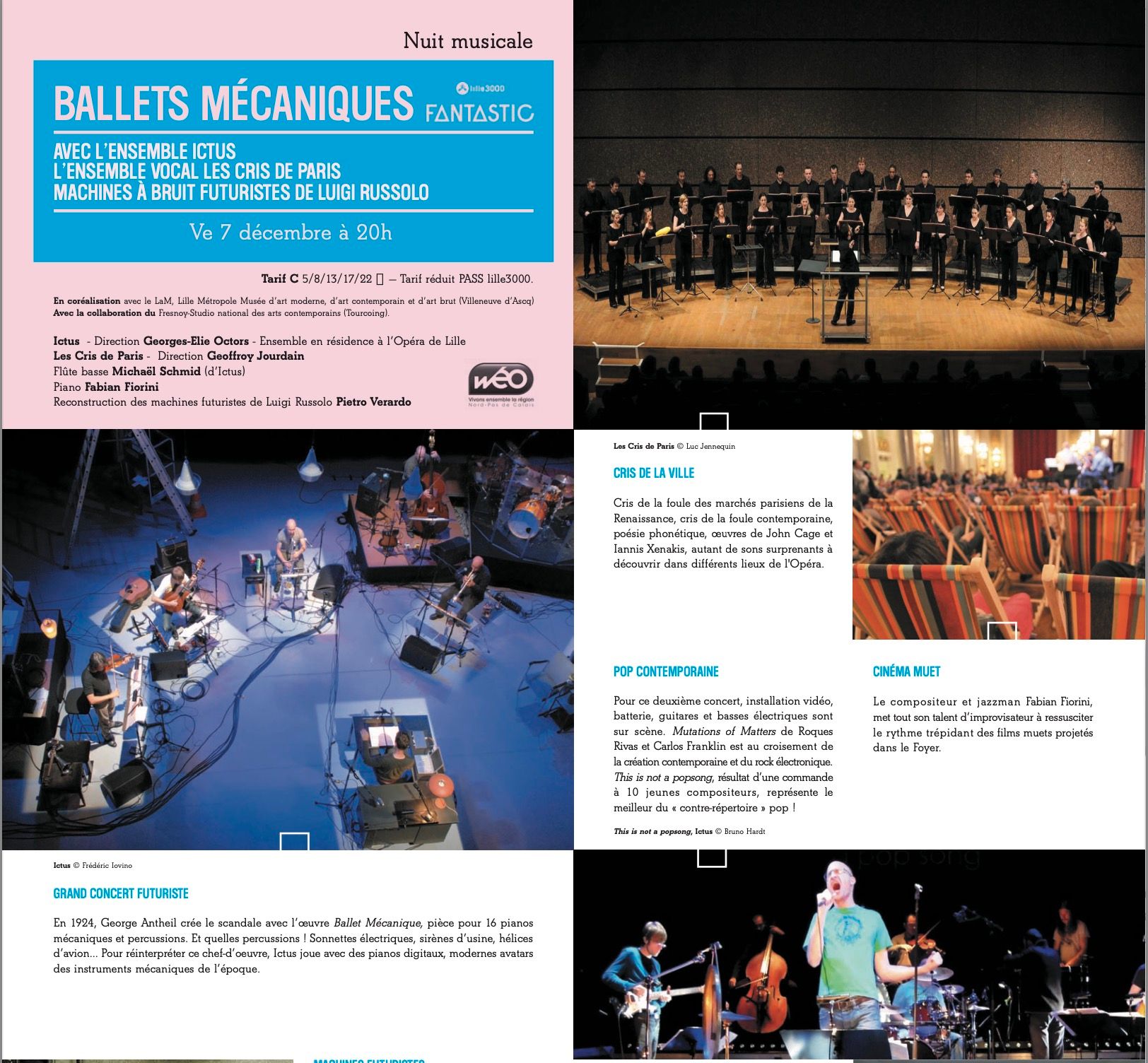
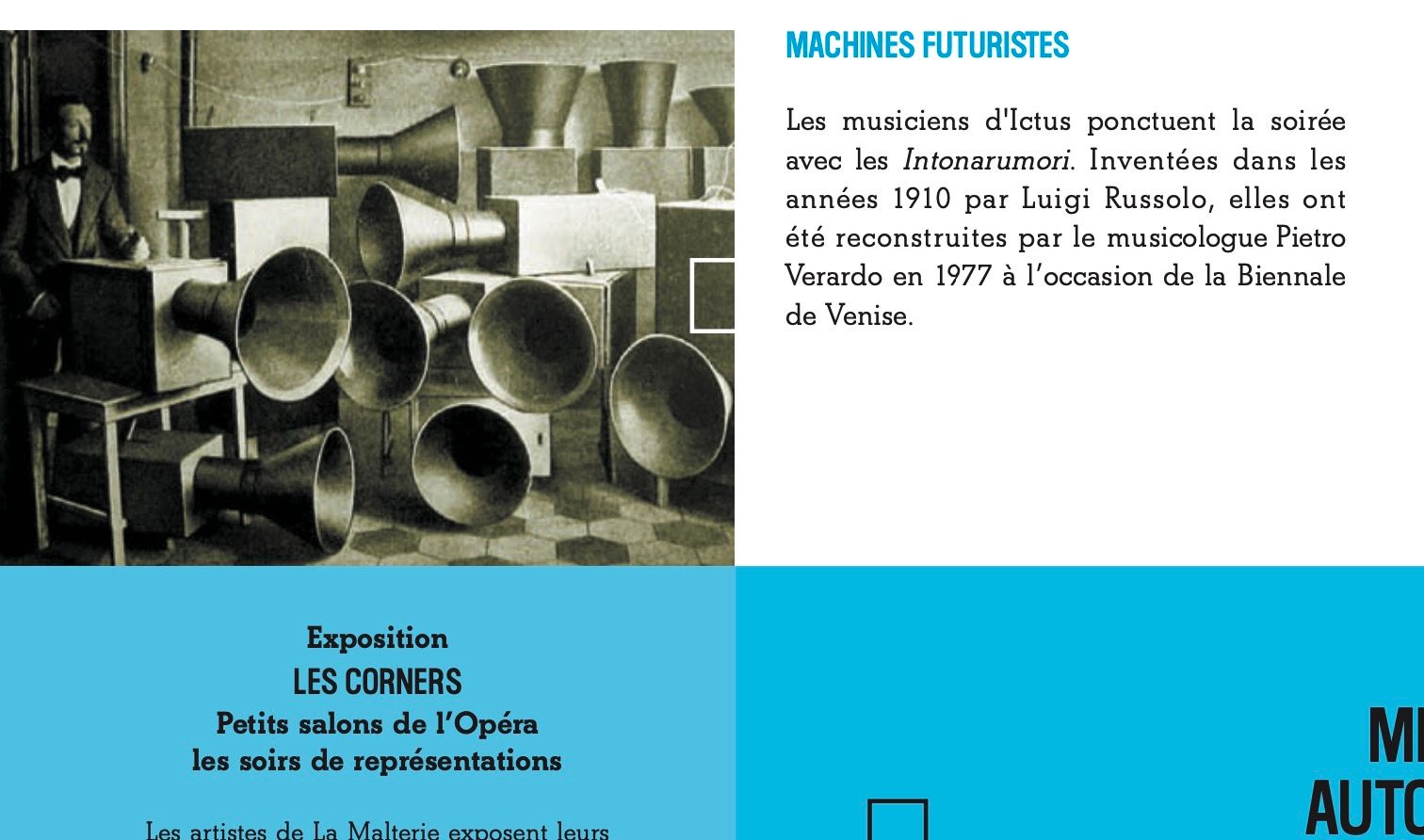
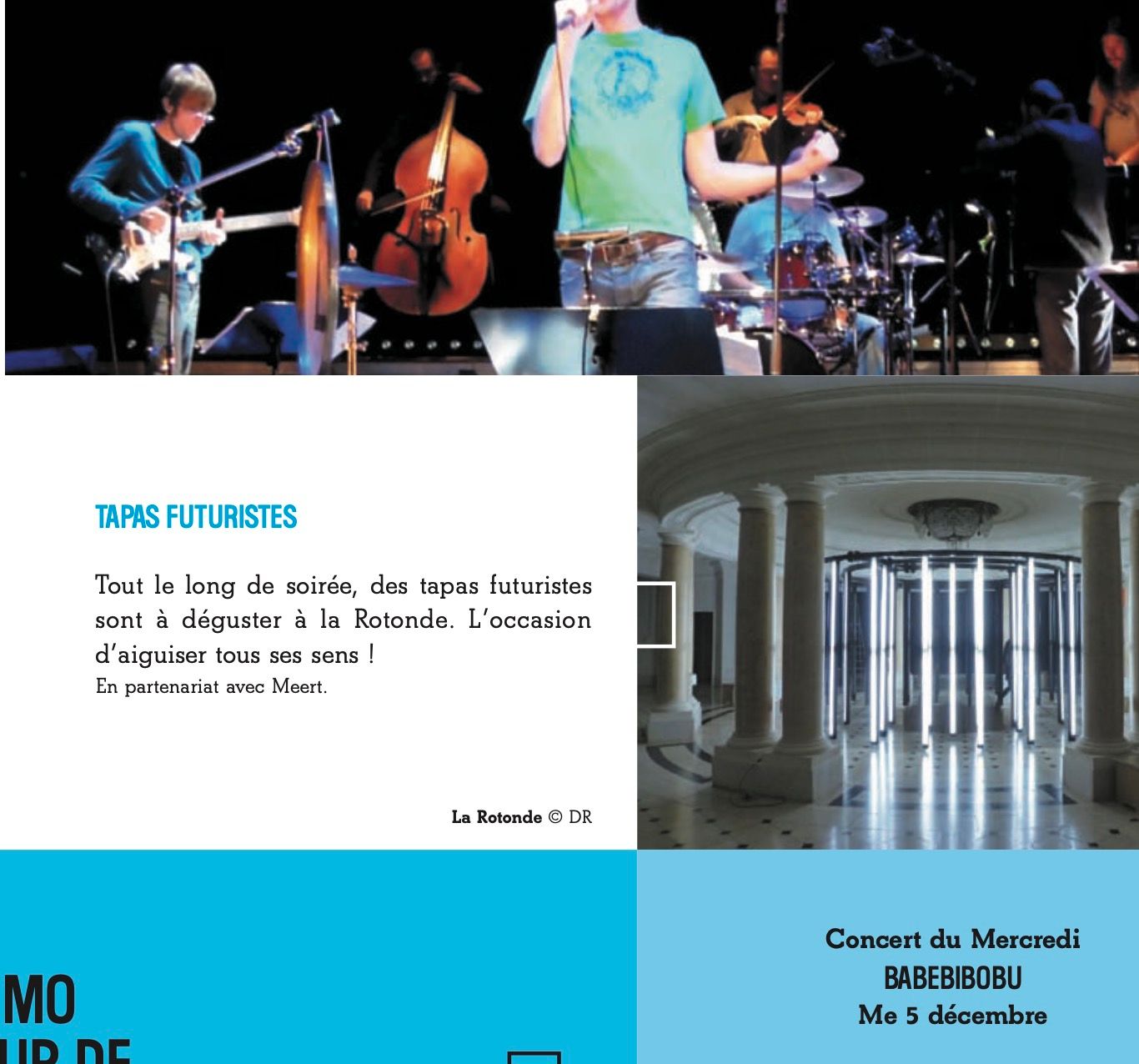
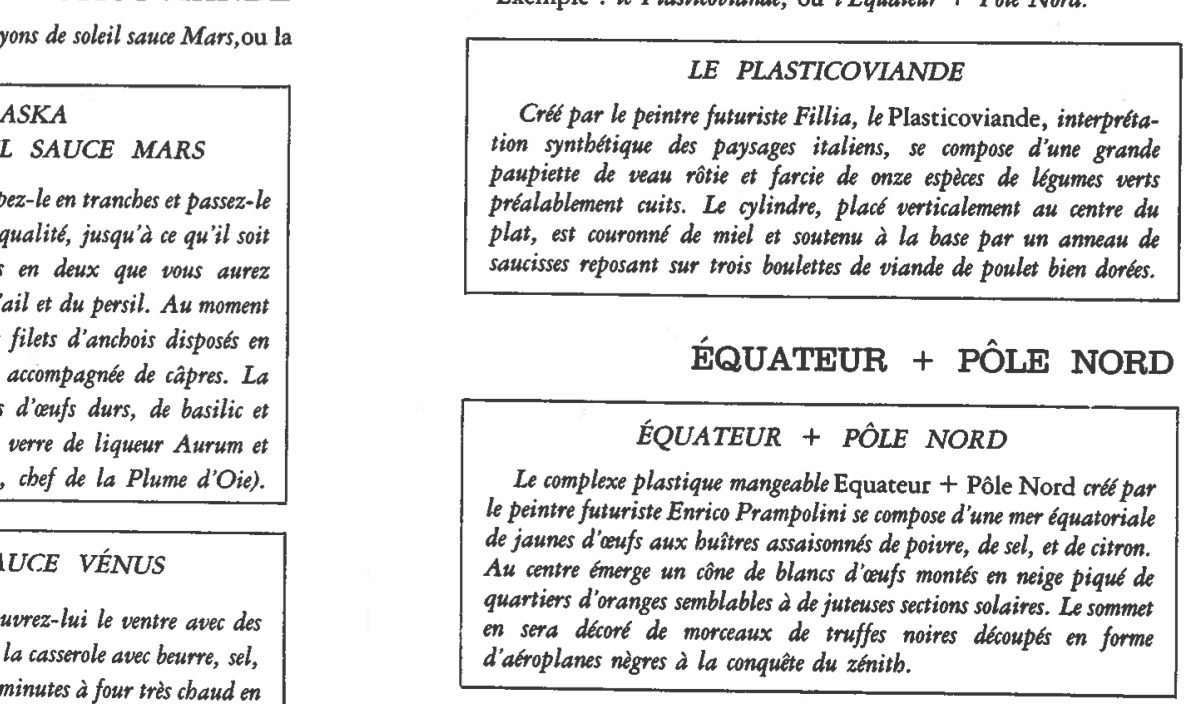
Excerpts from the program of December 7, 2012
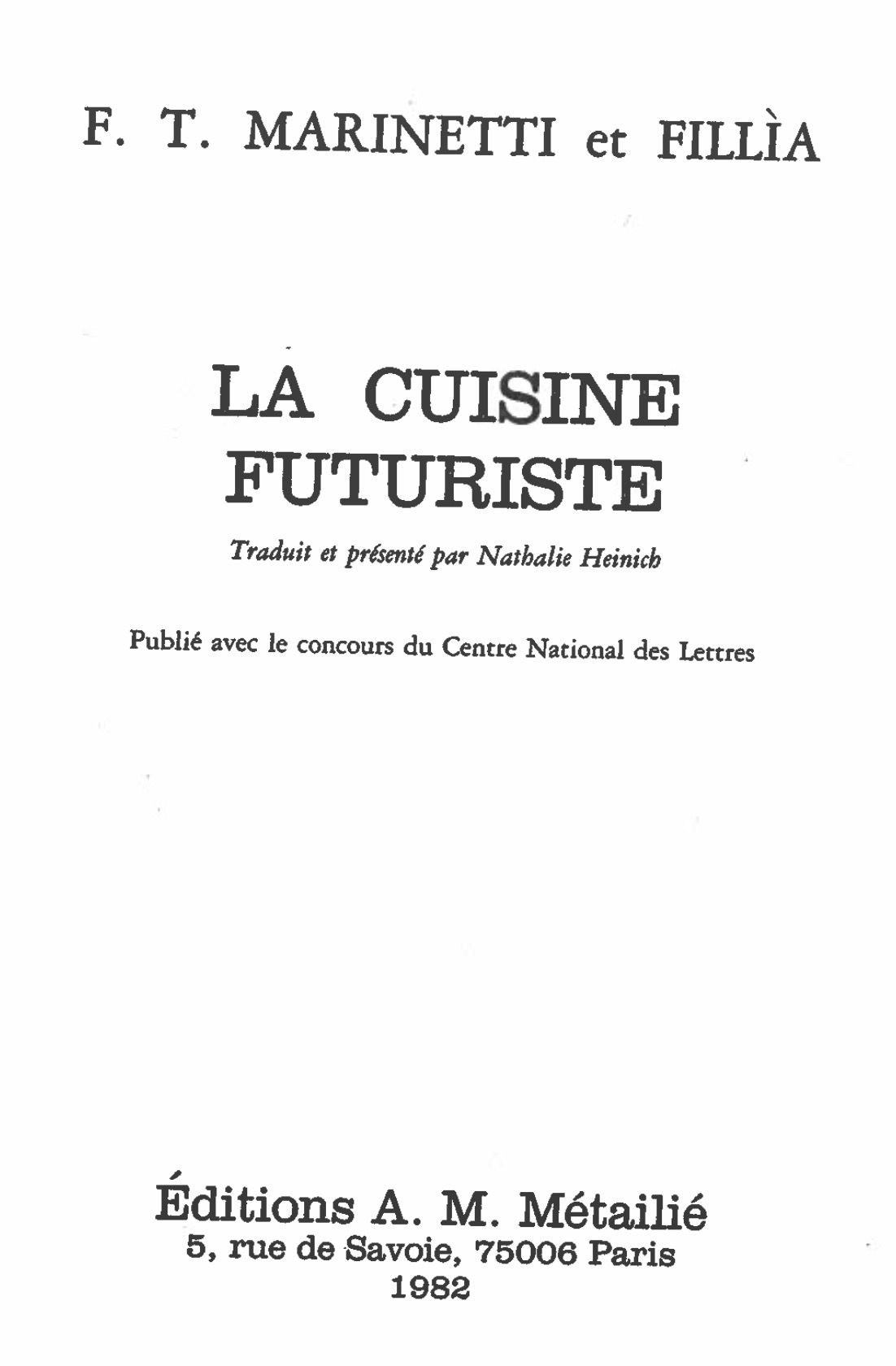
The Lille opera house had done things well. A caterer had worked on the original recipes for futurist cuisine, published in 1931 by Marinetti and the painter Fillìa. These synesthetic recipes involved light, touch, and scents. A milk soup, if we remember correctly, was presented under green lighting.
Video #3
Same version as above on this page (Lille Opera, December 7, 2012), in “Score Follower” version with Georges-Elie Octors' concert score.
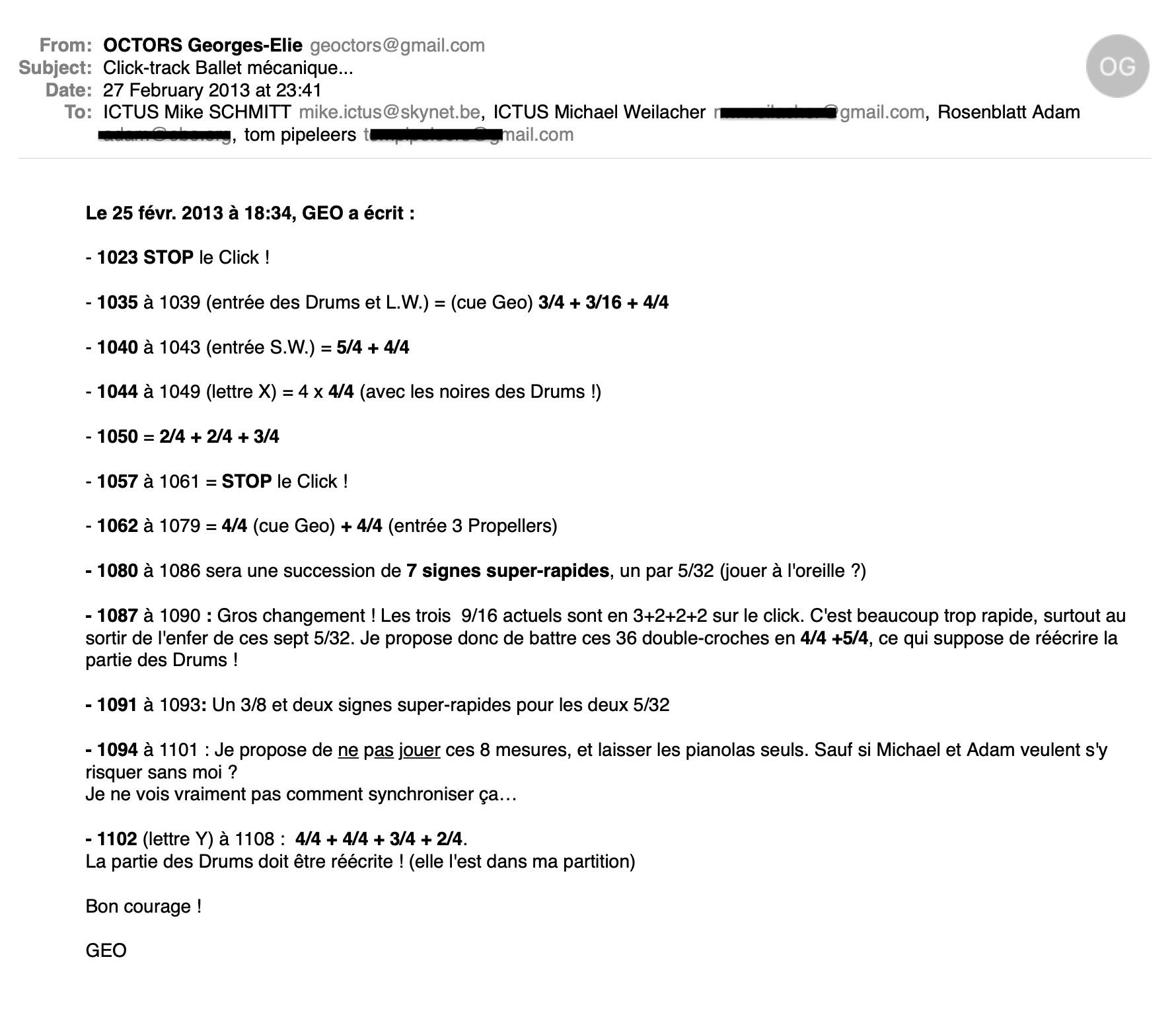
An email from Georges-Elie, about cuts and changes in rhythmic structure.
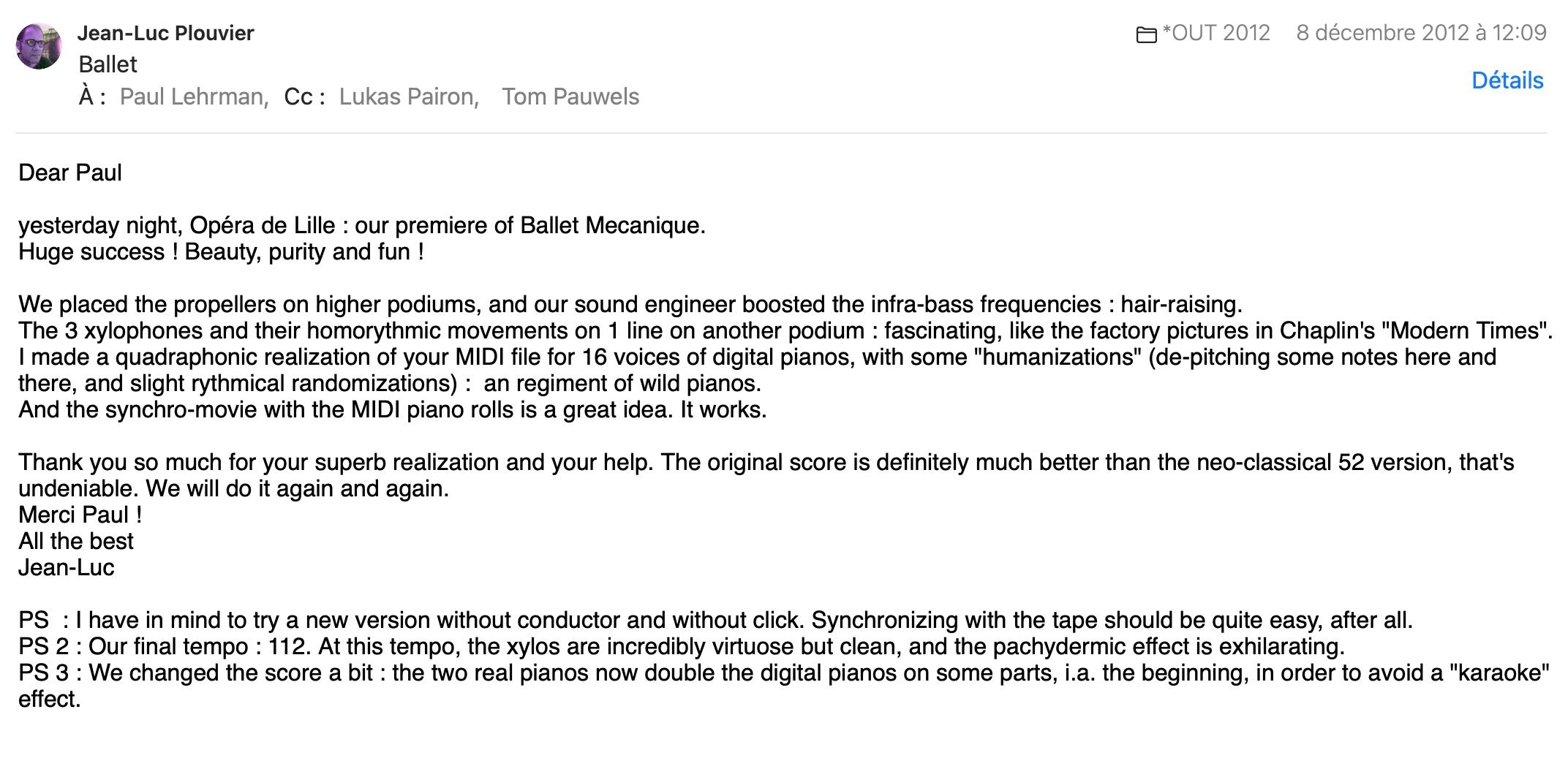
The day after
Email to Paul Lehrman

Ballet Mécanique
GALLERY
PRESENTATION
George Antheil (1900-1959) : Ballet Mécanique (1924) for two pianos, percussions, propellers, rings and siren.
ICTUS PREMIERE: Lille Opera (France), 07.12.2012: Ballets Mécaniques (dérive futuriste)
a marathon-programme in different spaces spread allover the opera-house, including works of Edgar Varèse, George Antheil, Luciano Chessa, Kurt Schwitters, a.o., presented by Ictus, Cris de Paris and soloists Michaël Schmid and Fabian Fiorini, as well as performer Luciano Chessa and the Russolo machines. LINK
Other performances (a.o.)
October 2013 with scientist Jean-Paul Van Bendegem
May 2015 with new MIDI machines developed by Stichting Logos
March 2022 in Belgian Trains Central Workshop, Mechelen
* MIDI arrangements inspired by Paul Lehrman's
* Conducted by Georges-Elie Octors
Video #1:
"Ballet mécanique, 1924, Film by Dudley Murphy et Fernand Léger.
Music by George Antheil, for 2 pianos, 3 xylophones, 4 bass drums, airplane propellers, electric bells, and sirens.
Performed by Ictus at Opéra de Lille, December 2012, Georges-Elie Octors (cond.).
MIDI files and recommendations by Paul Lehrman, reviewed by Ictus.
This version is a hypothesis. There is no “official” synchronization of the film and music that has come down to us.
BALLET MÉCANIQUE
[text : 2012]
Ballet Mécanique (1924), the original version of which we propose to re-enact (slightly revamped), was an attempt by the American composer George Antheil, the painter Fernand Léger, and the director Dudley Murphy to offer a multimedia experience before there was even a name for it.
In common with Edgar Varèse – although he was the author of a work that was much more uneven - the American George Antheil incarnated in France the very model of a "futurist" composer, thanks to his outrageous and impassioned attitude. An ephemeral friend of Stravinsky, admired by James Joyce and Jean Cocteau and adored by Ezra Pound, who hyped the composer to high heaven, the brilliant "Bad Boy of Music" (as he dubbed himself in his autobiography), dreamed up a wildly engine-like work, the most mercilessly mechanical score imaginable, outmatching the Noces by Igor Stravinsky, by which he had just been thunderstruck. Where Stravinsky had deployed four pianos, Antheil opted for 16. Sixteen mechanical pianos flanked by helicopter blades, sirens, eight bells, three xylophones and numerous percussion instruments. The form was cast in one piece "like a tree made of steel, while the style was at times cool and glistening and at other times burning like an electric oven". More: "With Ballet Mécanique, I am offering you for the first time music that is as hard and beautiful as a diamond ", he dared to write. But the best laid plans of mice and men... : the 16 unsynchronisable mechanical pianos were reduced to a single one, while four authentic pianists were recruited. On the opening night, the wigs of the audience members sitting in the front row were blown off by the helicopter blades, the sirens could not be stopped, it was omnishambolic. In the year 1952, the more restrained and neo-classical composer returned to the music and rearranged it to produce a lighter rhythm. What we are now offering is more or less the original idealistic and madly startling version of 1924, in keeping with the first manuscript. The sole difference is that the 16 mechanical pianos have given way to a horde of 16 synthesisers. Stravinsky's dissonance stretched to the limit, the unflagging repetition, the chemistry at work in the machine-like heavy-handedness and the lightening speed – all of these ingredients succeed in making the Ballet Mécanique a wholly unique work in the history of the 20th century.
As for Fernand Léger's specially commissioned film it will never be produced at the same time as Antheil musical work. From what ever angle it is tackled, the final cut fails to match the score. We will be offering a seven-minute extract, very slightly altered to obtain two or three points of intersection with the musical form. Léger was an enthusiastic participant in the adventure, during a period plagued by doubt, where the power of cinema rendered him somewhat inhibited and despairing when it came to painting: he had seen the Roue by Abel Gance and the films by Chaplin. It was then that he was struck by the idea of a "simultaneous" lyrical form (a typically futurist expression) of the moving image, dominated by extracts and close-ups.
He wrote: "No script. A series of rhythmical images, nothing else [...]. We persist until the observer's eye and spirit cannot stand any more, exhausting the entertainment value until it becomes positively unbearable."
ALBUM
Gallery below: photos in concert, rehearsing, and an excerpt from the score.
BELOW: Paul D. Lehrman's crucial contribution to understanding Ballet Mécanique and its contemporary realization with MIDI files.
Video #2
Our premiere in Lille Opera, December 7th, 2012, Georges-Elie Octors (cond.)
Contemporary music can be dangerous!
Excerpt from one of our technical data sheets. It is true that Georges-Elie, while rehearsing in our studio, wanted to test the sound made by a knitting needle when placed in the propeller blades, and that the needle pierced his hand. He miraculously escaped paralysis of that hand.
Excerpts from the program of December 7, 2012
The Lille opera house had done things well. A caterer had worked on the original recipes for futurist cuisine, published in 1931 by Marinetti and the painter Fillìa. These synesthetic recipes involved light, touch, and scents. A milk soup, if we remember correctly, was presented under green lighting.
Video #3
Same version as above on this page (Lille Opera, December 7, 2012), in “Score Follower” version with Georges-Elie Octors' concert score.
An email from Georges-Elie, about cuts and changes in rhythmic structure.
The day after
Email to Paul Lehrman